
Precision Diagnostics for Complex Systems.
Translate engineering design data into actionable field-service intelligence. Achieve ~85% initial fault coverage at product launch, reduce MTTR, and optimize design for supportability.
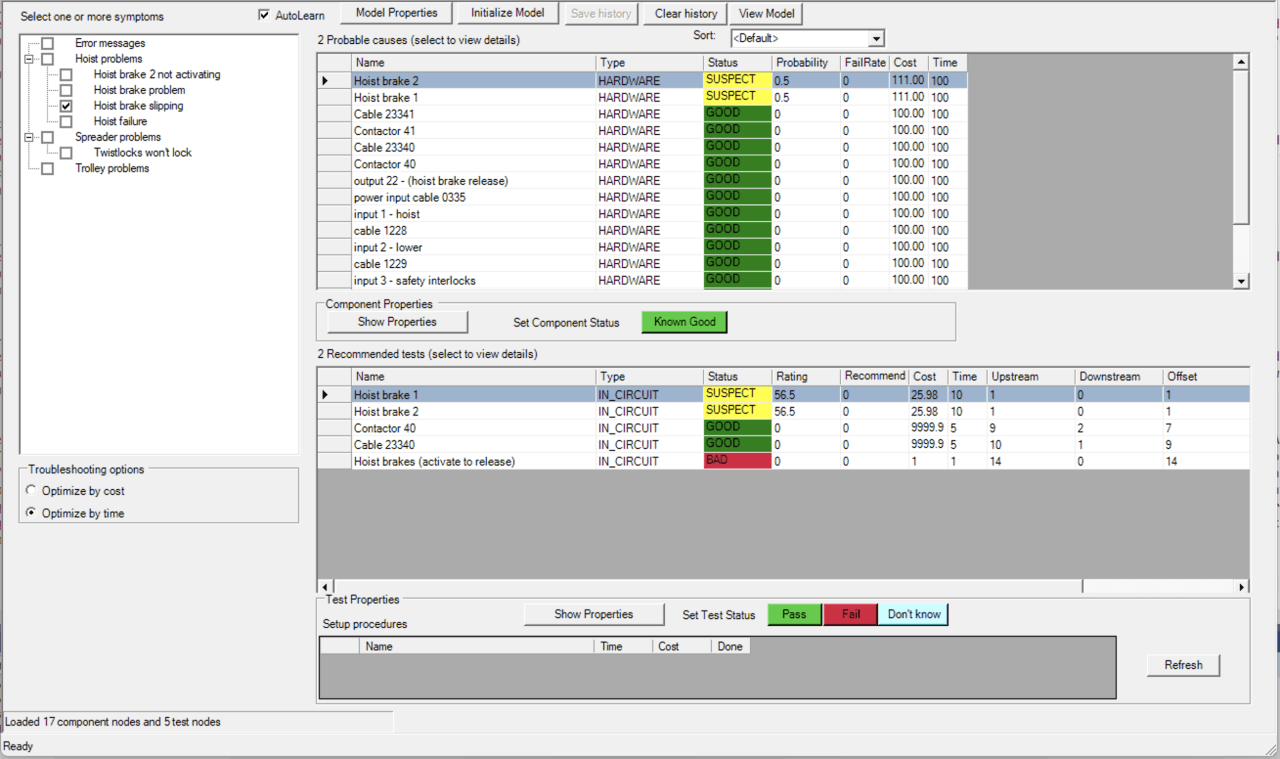
The complexity of modern systems has outpaced traditional troubleshooting.
Static manuals, tribal knowledge, and trial-and-error parts replacement are no longer viable strategies for mission-critical hardware. When downtime costs thousands per minute, you need deterministic, model-based precision.
At-Launch Readiness
Don't wait years for failure data. Generate ~85% initial fault coverage directly from engineering design models before the first product ships.
Design for Supportability
Evaluate testability during the design phase. Automate FMECA (Failure Mode, Effects, and Criticality Analysis) to uncover hidden dependencies.
Guided Field Service
Transform complex schematics into step-by-step diagnostic workflows. Empower junior technicians to troubleshoot like seasoned experts.
From Engineering Design to Field Execution.
iTech seamlessly connects the product development lifecycle with long-term operational support, ensuring your diagnostic capabilities mature alongside your hardware.
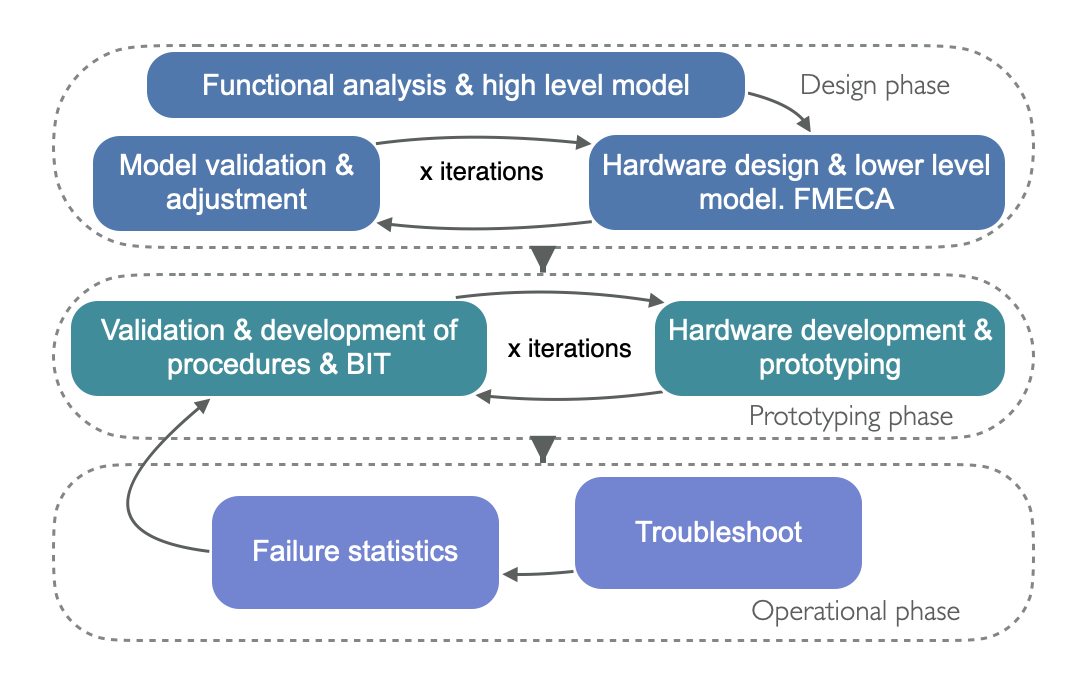
1. Design & Prototyping
Begin with a functional analysis and high-level model. As hardware design progresses, the lower-level model and FMECA (Failure Mode, Effects, and Criticality Analysis) are iteratively validated and adjusted.
2. Validation & Procedures
During prototyping, BIT (Built-In Test) logic and diagnostic procedures are developed in parallel. The model highlights testability gaps before the design is finalized, saving massive redesign costs.
3. Operational Phase
In the field, the model guides troubleshooting. As failure statistics are gathered, machine learning feeds real-world data back into the model, continuously optimizing diagnostic accuracy and cost metrics.
Precision Error Handling
When a fault occurs, technicians don't just see a generic error code. The iTech modeler computes exactly which hardware components are suspect, ranking them by probability, failure rate, and replacement cost.
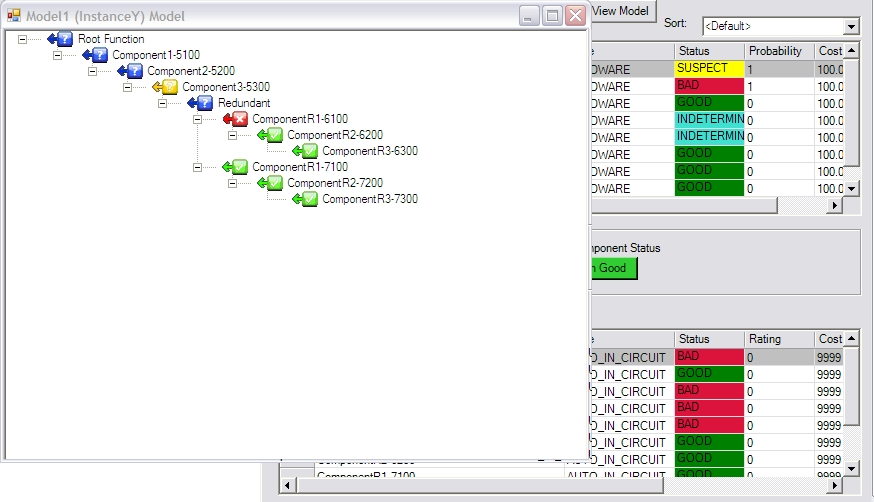
The model tree uses the same colors as the component and test status lists:
- Yellow components are suspect.
- Blue components are indeterminate or off path: they are not part of the current problem or are downstream of a bad test, so their current status cannot be determined.
- Green components are good.
- Red components are bad.
 Open full-size image in a new tab
A complete diagnostic ecosystem.
From design engineering to field service, iTech bridges the gap between how systems are built and how they are maintained.
Model-Based Reasoning
Capture the physics and logic of your system in a functional model. iTech infers causality dynamically rather than relying on static decision trees.
BIT & Error Code Interpretation
Translate cryptic Built-In Test (BIT) codes and telemetry data into exact component-level failure isolates instantly.
Embedded & Remote Diagnostics
Deploy diagnostic reasoning engines directly on edge hardware or via centralized remote operation centers.
Manual Field Guidance
Generate dynamic, context-aware troubleshooting sequences that adapt in real-time based on test results and component costs.
FMECA Automation
Auto-generate compliance and reliability reports directly from the diagnostic model, ensuring rigorous design standards.
Machine Learning Integration
Continuously refine model accuracy with real-world failure statistics, shifting from ~85% initial coverage to >98% maturity.
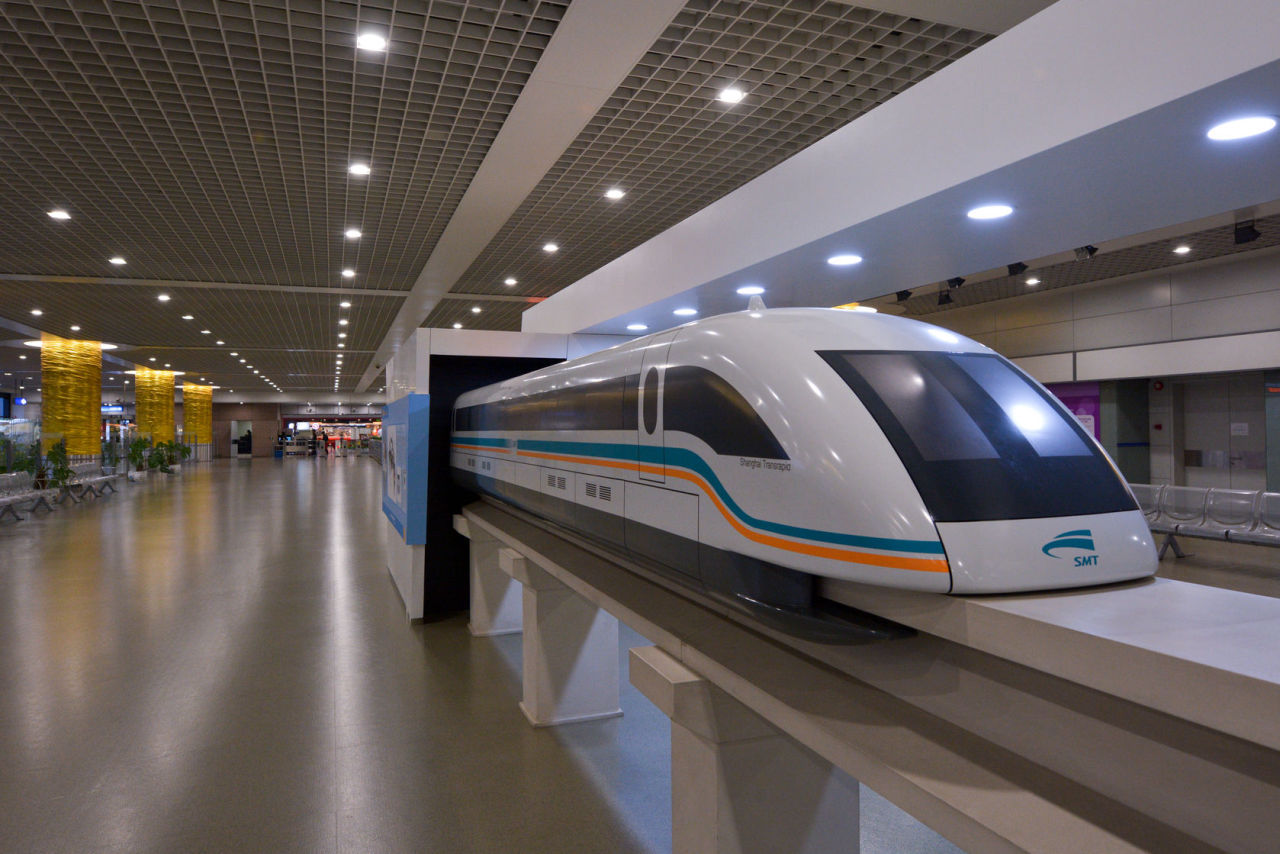
Transrapid MagLev: Diagnosing the Future.
The Transrapid magnetic levitation train represents one of the most complex cyber-physical systems ever engineered. Traditional fault isolation was insufficient for the rigid safety and uptime requirements of high-speed rail.
By implementing iTech's model-based reasoning, engineering teams could translate the vast network of sensors, power electronics, and control systems into a cohesive diagnostic model—drastically reducing mean time to repair and increasing operational availability.
- Analyzed thousands of interrelated components dynamically.
- Reduced reliance on trial-and-error diagnostics.
- Provided real-time guidance to maintenance crews.
Ready to optimize your diagnostic strategy?
Contact our engineering team to discuss how model-based troubleshooting can reduce downtime and spare-parts consumption for your specific hardware.